


Unique Piece
Conophytum Blandum Arm985
Conophytum Blandum Arm985
Couldn't load pickup availability
PLANT
Conophytum blandum (ARM 985) is a rare mesemb native to South Africa, admired for its dense, cushion-like growth and its sculptural, finger-shaped bodies.
Each head is formed by fused leaves, creating a compact cluster that feels almost mineral in structure, somewhere between plant and stone.
The soft blue-green tones and slightly matte surface give the plant a calm, restrained presence, while the tightly packed growth hints at its adaptation to extreme, arid environments.
This is a plant for collectors who appreciate subtlety, rhythm, and form rather than scale, a living landscape in miniature.
Water Needs: Low to moderate, seasonal.
Water during the active growing period (autumn to spring), allowing the substrate to dry between waterings. Keep dry during summer dormancy.
Light Requirement: Bright indirect light to gentle direct sun.
Too much harsh sun can stress the plant, while good light maintains compact growth and color.
Maintenance: Low.
Requires a very well-draining mineral substrate. Avoid overwatering and stagnant moisture, especially during dormancy.
Common Names: No widely used common names
Family: Aizoaceae
Origin: South Africa
Cold Tolerance: Mild cold tolerant if kept dry. Protect from frost.
Heat Tolerance: Good, provided it remains dry during hot summer months.
CERAMIC
Planted in a handcrafted Neraw ceramic vessel with a wide, flared rim that echoes the horizontal spread of the plant.
The vessel combines a dark, earthy lower body with a lighter, stone-like upper layer, punctuated by natural cavities and exposed textures that recall eroded rock surfaces.
The broad lip frames the dense cluster beautifully, allowing the plant to read as a compact landscape rather than a single specimen.
Together, ceramic and plant form a grounded, architectural composition where mass, texture, and restraint come into balance.


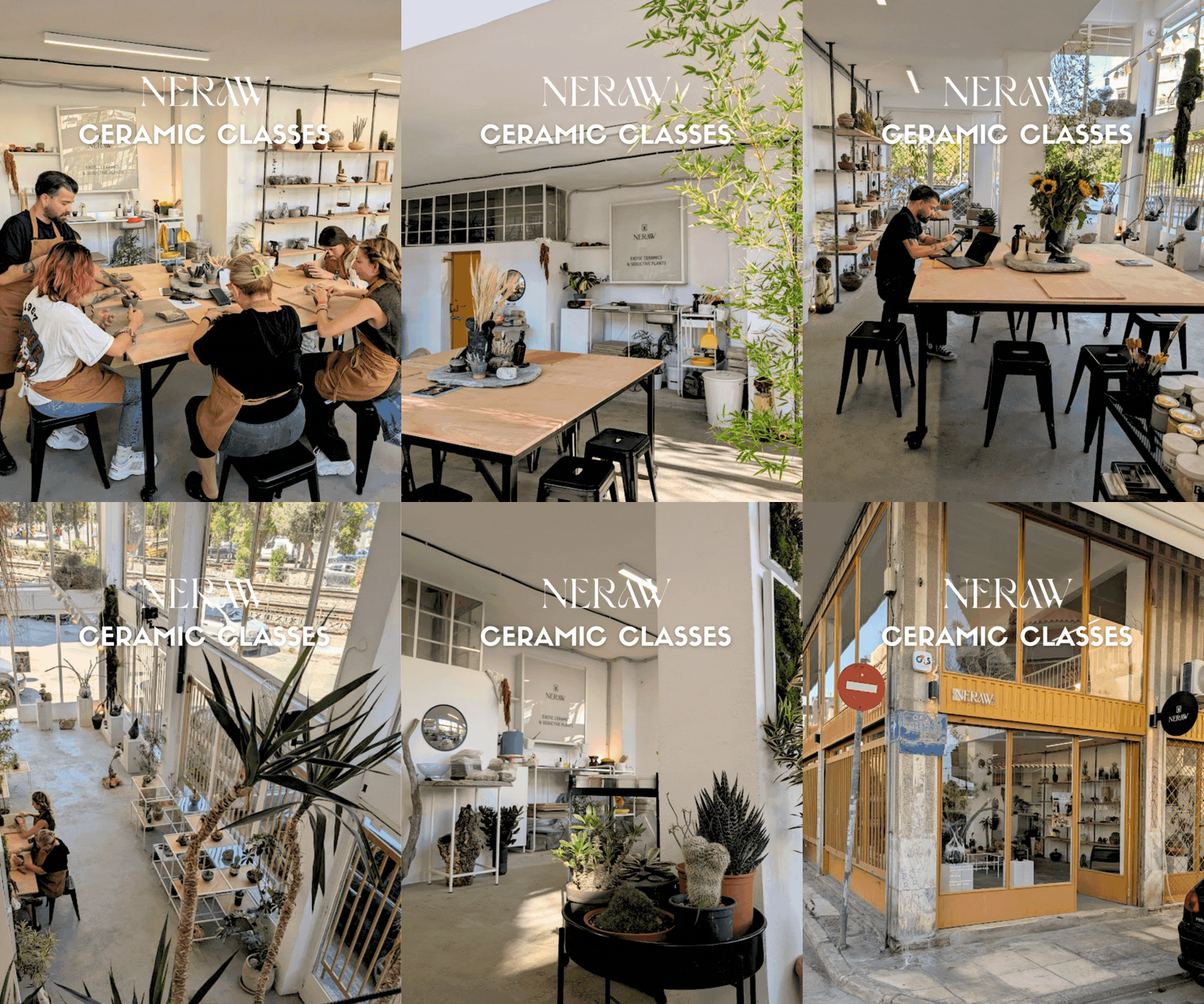
NERAW CERAMIC CLASSES & WORKSHOPS
Learn to shape, sculpt, and glaze your own ceramics in our inspiring classes in Votanikos, Athens. Choose between our morning or evening classes & discover the joy of working with clay.